What Is an Exchange Rate?
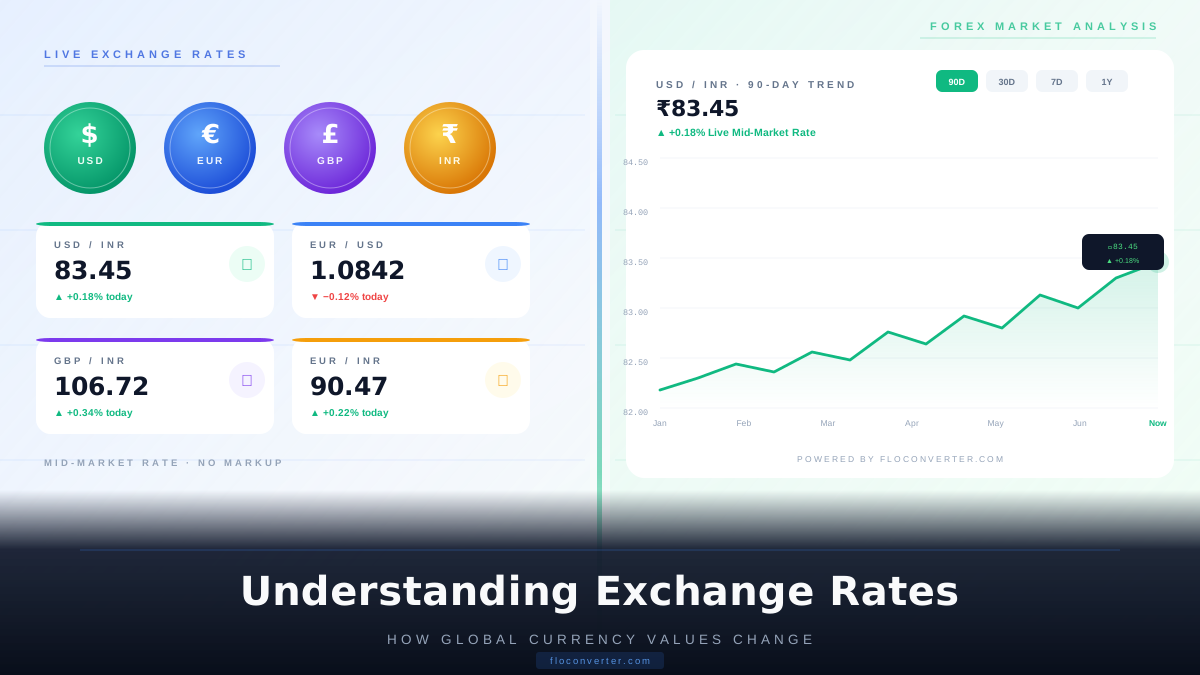
An exchange rate is the price of one currency expressed in terms of another. When you see "1 USD = 83.5 INR", that means one US Dollar currently buys 83.5 Indian Rupees. This price changes constantly — sometimes by fractions, sometimes by significant amounts — depending on global supply and demand for each currency.
What Moves Exchange Rates?
The Mid-Market Rate vs. Bank Rates
The mid-market rate — also called the interbank rate — is the midpoint between the buying and selling prices in the wholesale currency market. It's the fairest benchmark for any conversion.
Banks and currency exchange services rarely offer you the mid-market rate. They add a spread (markup) that can range from 0.5% to 5% or more, depending on the provider. Floconverter always shows you the clean mid-market rate so you know exactly what markup your bank or transfer service is adding.
See live mid-market rates for 170+ currencies at floconverter Live Rates.